Thursday, March 15, 2012
Week 9 Reflection
The creation of the heavens is explained differently and interpreted differently in every culture. A myth is a traditional/cultural story that has been passed either by word of mouth, written down, or pictures, from person to person over time. Mythical thinking differs from scientific thinking by showing that there is more than one way of interpreting something. It makes you think about the possibility of a higher being rather than just evolution. There were some similarities between a few myths, like how there was at least one god and man was created in the image of that god. Some reasons for these similarities and differences is because as humans, we tend to think somewhat alike, but interpret everything in a different way, be it ever so slightly. These myths mean that humans could have possibly been created rather than just evolve from a species that still exists today.

Creation Myths
Questions
1.
In all these stories, how do the gods behave?
2.
What is the place of human beings in these
stories?
3.
How does God behave toward Man?
Omaha
Creation Myth:
1.
The god just gives the people what they want, which was a place to live. The god behaves charitably.
2.
The human beings were lost and didn’t know where they belonged. They were obviously not as glorious as the
god or they would have made themselves a place to live.
3.
He behaves as though he wants to help the people he created.
Pawnee Creation
Myth:
1. Mother Corn
behaves very powerfully.
2. They are ever
indebted to Mother Corn. They weren’t
anything before she created them.
3. She is very
commanding toward her people, but also very protective. She wants to help them in every way she can.
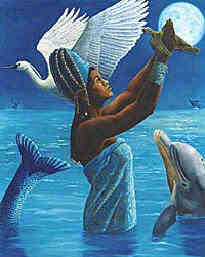
An African
Cosmogony:
1. The god in this
story behaved very sickly. He vomited
everything up that was created and after that didn’t do much.
2. Humans came from
the god that vomited them up, so the place of humans in this myth is to help
keep the earth clean.
3. He helps man to
learn how to create fire. He wants to
help them.
Sunday, March 11, 2012
Week 8 Reflection
Carson helped America realize the harmful effects their pesticides and other harmful chemicals were having on the environment. She is very matter of fact and really makes you think. She is very witty and funny. The fable shows how people can impact their environment without even knowing it.
The Easter Island society became a wasteland from a natural paradise because as society gained progression and moved forward, they were unaware of the impact they were having on their natural resources. The statues show how the Islanders didn't really care about their environment, only to show off to the other tribes. This story can be compared to our society in many ways because we are becoming more and more unaware of how much we are using our resources each year. If we don't be careful and start being more preservative with our resources, we are going to end up like the Easter Island society.
The Easter Island society became a wasteland from a natural paradise because as society gained progression and moved forward, they were unaware of the impact they were having on their natural resources. The statues show how the Islanders didn't really care about their environment, only to show off to the other tribes. This story can be compared to our society in many ways because we are becoming more and more unaware of how much we are using our resources each year. If we don't be careful and start being more preservative with our resources, we are going to end up like the Easter Island society.
Week 7 Reflection
The polar extremes Abbey discusses are either being such an environmentalist fanatic or not caring about the parks at all and wanting to purposefully ruin them. His writing style is very informal and makes the reader feel like they can relate well. He is very funny, so I do enjoy his writing style quite a lot. I feel like I can relate well to him and that we understand each other.
Week 6 Reflection
The argument in the text "Wildlife in American Culture" is that society is having a very negative impact on the environment. I think that Leopold is right because we really could be better about preserving our natural resources. We need to be doing all we can to help save our earth. I am not a hunter, but I think a hunter would still think that although we need to help preserve our natural resources, we should still be able to hunt and use the animals for food. I think that people from the East Coast wouldn't care about our natural resources as much because they don't have as many mountains or wide open spaces there. They wouldn't care as much because they haven't seen how beautiful the earth can be if we don't pollute it.
Tuesday, March 6, 2012
A Fable for Tomorrow
Page 370. The general argument made by Rachel Carson in
her work A Fable for Tomorrow is that
if humankind is not careful, we could lose all the beauty around us. More specifically, Carson suggests that no
one can take this beauty from us, but ourselves. She writes, “No witchcraft, no enemy action
had silenced the rebirth of new life in this stricken world. The people had done it themselves” (p.
371). In this passage, Carson I
suggesting that unless society starts to take better care of the earth, all of
the beautiful things we enjoy could simply disappear and we wouldn’t know what
to do to get them back. In conclusion,
it is Carson’s belief that we need to take care of the earth we live in to
enjoy it’s beauty.

In my view, Carson is right because
no one is going to take care of the earth or destroy the earth except for our
society because we are the ones that make decisions to either help or harm the
earth. For example, we can help the
earth by either carpooling or riding our bikes more often instead of buying and
driving inefficient fueled vehicles that cause carbon monoxide poisoning in the
air. Although Carson might object that
it’s not too late to turn back from this point, I maintain that if everyone
starts making healthier decisions for our earth, we can turn back and make the
earth a better place. Therefore, I
conclude that making the earth a better place for everyone, including the earth
itself, should be everyone’s number one priority because without the earth, we
couldn’t survive.
Easter's End
Page 425. The general point made by Jared Diamond in
his work Easter’s End is that if
societies use up their resources, they become extinct. More specifically, Diamond suggests that if
American society doesn’t learn from the Easter Islanders mistakes, we will end
up like them. He writes, “unlike the
Easter Islanders, we have histories of the past –information that can save us”
(p. 431). In this passage, Diamond is
suggesting that we can save ourselves and learn from past mistakes of
others. In conclusion, it is Diamond’s
belief that we can save ourselves from the fate of cultures like the Easter
Islanders if we use our resources wisely and start living differently.

In my view, Diamond is right because
society needs to realize how wasteful we are being of our resources and start
coming up with a plan to save our earth.
For example, if everyone were to start realizing that we don’t need buildings
everywhere and we don’t need our inefficiently fueled cars as much as everyone
thinks we do, our earth would start to somewhat recover slowly. Although Diamond might object that people won’t
resist this change, I maintain that although people will resist, the change
will be well worth it to continue our society.
Therefore, I conclude that we need to learn from past mistakes and society
needs to start making better decisions to help our earth recover before it is
too late.
Sunday, March 4, 2012
The Hudson River School
The
Hudson River School started in 1825 and ended in 1880. The purpose of the Hudson River School was to
help young artists view the landscape of America and romanticize it. Some of the unique characteristics in the paintings
created at the HRS were the many trees, open fields, waterfalls, mountains,
dramatic sunsets, and especially the spiritual light coming from above. There weren’t any animals in any of the
paintings because if the artists wanted to romanticize the landscape, they
needed to show how beautiful and safe it was, rather than how scary and dark it
can really be. Almost all of the
paintings were very bright and happy.
The paintings made you feel like you would feel much better if you were
to spend more time in nature rather than in the city. Europeans did not have any open wilderness at
this time such as America had, and Europeans envied that. They wanted to be able to live in the free,
open air as Americans did and still do today in some cases. After these paintings were viewed by
Europeans, they would want to move to America.
The settings of the paintings looked very realistic, but also looked
unrealistic because it was so bright and beautiful with all of the waterfalls,
open space, and vivid light. Some
Europeans didn’t believe these were realistic because of those things. They didn’t believe such beautiful places
could exist.


In conclusion, because of these
paintings, people from Europe wanted badly to come to America. If they wanted so badly to come to America
and see these beautiful landscapes, we should want to protect them as much as
we can. “Find…encouragement and
inspiration in precisely the present condition of things, and cherish it with
the fondness and enthusiasm of lovers” (Allen & Almonte, 2009, p. 354). This means that although we should be happy
with the current circumstances, meaning how our landscapes are now, we should want
to protect them and better them as much as possible. The painters from the HRS Romanticized the
American West because of our beautiful landscapes. We should want to continue that romanticism
and keep them looking as beautiful as we can.
References
Belson,
J., & Henderson, R. (2011). Retrieved March 1, 2012 from: http://whitemountainart.com/biographies/bio_jfc.htm
Belson,
J., & Henderson, R. (2011). Retrieved March 1, 2012 from: http://whitemountainart.com/biographies/bio_fec.htm
Wikipedia. (2012).
Retrieved March 1, 2012 from: https://en.wikipedia.org/wiki/Thomas_Moran
Allen,
P., & Almonte, P. (2009). That is
the question. United States of
America: Pearson.
Subscribe to:
Posts (Atom)