Friday, May 25, 2012
Final Reflection

Week 18 Reflection
there were many privileges on the list that were remarkable but the one that stood out the most to me was number 46. It said "I have the privilege of being unaware of my male privilege." This is so true because more than half of all men really are unaware of their male privilege and believe there is no such thing. My friend and I were talking about this the other day and he said that more than half the things on the checklist was just dumb and didn't exist. Men really are unaware of their male privilege.
Men in the media today really are either very emotional or very tough. It's one extreme or the other. You never really see just any plain, average Joe guy on television anymore. Back when TV first came out, I think they had people on television that connected really well with their audiences because of the fact that they were average. It has changed a lot since then and men cannot connect as well with the characters portrayed on TV today rather than back in the day.
When I get married, I want my husband to be able to make me laugh and just goof around with me. Yes, good looks are important, but not as important as the connection you feel with them and how well you get along with them. I'm not a very superficial person so as long as me and my husband are happy, everything will work out in the end. I also would like my husband to be patient with me, as I am human and I make mistakes. He needs to be good with kids as well. I'm excited to be able to get married to someone like this someday and be happy for the rest of my life.
Men in the media today really are either very emotional or very tough. It's one extreme or the other. You never really see just any plain, average Joe guy on television anymore. Back when TV first came out, I think they had people on television that connected really well with their audiences because of the fact that they were average. It has changed a lot since then and men cannot connect as well with the characters portrayed on TV today rather than back in the day.
When I get married, I want my husband to be able to make me laugh and just goof around with me. Yes, good looks are important, but not as important as the connection you feel with them and how well you get along with them. I'm not a very superficial person so as long as me and my husband are happy, everything will work out in the end. I also would like my husband to be patient with me, as I am human and I make mistakes. He needs to be good with kids as well. I'm excited to be able to get married to someone like this someday and be happy for the rest of my life.
Week 18: Gender
Male Privilege Checklist:
Page 536. This passage was very interesting to me. I really enjoyed it because it had so many unique facts and truths that most people never really think about day to day. My favorite quote in this passage was number 46, "I have the privilege of being unaware of my male privilege" (p. 538). I really thought this was interesting because as we were discussing this passage in class, one of my friends that is a boy disagreed with more than half of the things on the checklist. Men really are unaware of their male privilege and they need to be more grateful.
 Media Portrayals:
 Page 538. The following stereotypes (p. 539) are very common in the media. The Joker: Joey from Friends. The Jock: Puck from Glee. The Strong Silent Type: Jay from Modern Family. The Big Shot: Iron Man. The Action Hero: Malfoy from Harry Potter. The Buffoon: Phil from Modern Family. This passage said "The study also revealed that the boys were quite aware that these male characters on television differed from their own friends, fathers, and from themselves" (p. 540). I thought it was interesting that the men were aware of the fact that these stereotypes are really quite uncommon in the real world, but it is the way in which the media chooses to portray them.


Look for My Prince Charming:
 Page 543. This passage was very interesting to me since it has to do with both gender and race. Shalmali Pal is talking about how she is trying to find someone that she wants to marry, but she also wants him to be Indian like her. The reason for this interracial marriage for her, and for most other people I would assume, is because it means less confusion for both parties. "When people ask why I've agreed to my family's setups, I could say it's about preserving my cultural heritage...but in the end, I'm just lazy. Marrying an Indian means a lot less explaining" (p. 543). This was what she meant by less confusion, is that she wouldn't have to explain all of her cultural and heritage background to the person she marries if he is Indian. I think that that is why interracial marriages are so common in our society and that they will continue to be for quite some time.
Page 536. This passage was very interesting to me. I really enjoyed it because it had so many unique facts and truths that most people never really think about day to day. My favorite quote in this passage was number 46, "I have the privilege of being unaware of my male privilege" (p. 538). I really thought this was interesting because as we were discussing this passage in class, one of my friends that is a boy disagreed with more than half of the things on the checklist. Men really are unaware of their male privilege and they need to be more grateful.
Look for My Prince Charming:
Thursday, May 24, 2012
Shocking Story
Page 602. The general argument made by William Bradford
Huie in his work The Shocking Story of
Approved Killing in Mississippi is that blacks really were treated very
unfair during the time of integration among races in public society. More specifically, Huie argues that white
people were not even worried about the consequences of hurting another human
being because the law enforcement still didn’t care about different races. He writes, “[Milam] was worried for the first
time. Somebody might see [them] and
accuse [them] of stealing the fan” (p. 606).
In this passage, Huie is suggesting that the kidnappers weren’t even
worried about the consequences of violating another human being’s rights, they
were only worried about what people would think if they thought they had stolen
a fan. In conclusion, it is Huie’s
belief that white people during this time were not held accountable for their
actions and the heinous killing that was committed was completely accepted by
the community in which they lived.
In my view, Huie is right because there
was never any public question about if those men had even had a reason for
doing it or not and it was totally accepted by everyone in the white
community. For example, if those men
would have done what they did to Emmitt to a white boy, they would have been
sent to jail, but since it was too an out-of-town black boy, no one even had a
second thought about it. Although Huie
might object that those men had a reason, I maintain that those men that killed
him had justified their reason in their minds enough so that they would feel
good enough about killing a young black boy.
Therefore, I conclude that even after integration, blacks were still not
being treated fairly and that those men should have been sent to jail for what
they had done.
Hughes
Wednesday, May 23, 2012
Graduation
Week 17 Reflection
The importance of the role models in this text was very significant. The speaker was trying to tell these African-Americans that they could only grow up to be as great as the other black people, not to be some scholar or the president, just sports or doing things in the home. Maya Angelou viewed the differences she heard in the speaker's choices because he would not have given that same speech to the white people. She felt degraded and she felt as if her graduation day was ruined.
Week 16 Reflection
The culture in which both these writers were living was one of extreme racism and prejudice. The discrimination was allowed and condoned in America because racism had been going on for so long in America, people really believed there was something "wrong" with other races. This was condoned because everyone was so used to it and didn't want to change their way of thinking after so many years.
Saturday, May 5, 2012
Week 15 Reflection
Many parts of this story was familiar to me. It reminded me in many ways of Romeo and Juliet. They feel like they need to hide their feelings from each other because their families were in such dispute with one another. Tristan chooses love because he decides that love is more important than honor if it is true love.
Tristan
Page 302. This passage is a poem that is just talking
about two lovers that overcome their shame of their love for one another. It talks about how they “hid their feelings
from each other” (p. 303). I can really
connect with this because there have been so many times in my life where I hide
my feelings from boys that I like. It
also said in the passage that “man was there with woman, woman there with
man. What else should they be needing?”
(p. 305). I really liked this because it
made me think that love is really all anyone needs in the world. If you have someone to love, possessions and
material things really shouldn’t matter.
In the end, none of those things will stick with you throughout your
life really except for the people you love and the people who love you. Love is all you need, and I truly believe
that.
Week 14 Reflection
The Symposium
1. Diotima plays the role of reason and reality in this story. She is introduced to the audience to show that event though she is not widely known, she was in many ways, a philosopher.
2. Socrates represents the idealized version of the lover as given in Diotima's account because he is always trying to show how everything really can be perfect. He also has many questions, which represents the fact that idealized version of lovers are often unaware of what is going on and are somewhat confused. Diotima gives him reality checks to show that love is not always perfect.
Other Passion Readings
1. Some concepts/rules in the reading that are still basic to romantic love are: Love is always growing or diminishing, it is not proper to love one whom one would be ashamed to marry, and a lover is always fearful of losing a loved one.
2. He believes they should be respected, especially if they are of a higher class.
3. "Vaster than empires, and more slow" is how he said his love would grow. This is the most valuable instruction in a good marriage because fully loving and appreciating someone for who they really are takes time, but in the end, their love for each other will be huge.
4. They did not acquiesce. It talked about how she would die a virgin.
5. Some symptoms of love are that it is "a universal migraine" and it "blots out reason." This means that everyone has experienced love at some point or another and it blots out reason means that love makes people to crazy, irrational things.
1. Diotima plays the role of reason and reality in this story. She is introduced to the audience to show that event though she is not widely known, she was in many ways, a philosopher.
2. Socrates represents the idealized version of the lover as given in Diotima's account because he is always trying to show how everything really can be perfect. He also has many questions, which represents the fact that idealized version of lovers are often unaware of what is going on and are somewhat confused. Diotima gives him reality checks to show that love is not always perfect.
Other Passion Readings
1. Some concepts/rules in the reading that are still basic to romantic love are: Love is always growing or diminishing, it is not proper to love one whom one would be ashamed to marry, and a lover is always fearful of losing a loved one.
2. He believes they should be respected, especially if they are of a higher class.
3. "Vaster than empires, and more slow" is how he said his love would grow. This is the most valuable instruction in a good marriage because fully loving and appreciating someone for who they really are takes time, but in the end, their love for each other will be huge.
4. They did not acquiesce. It talked about how she would die a virgin.
5. Some symptoms of love are that it is "a universal migraine" and it "blots out reason." This means that everyone has experienced love at some point or another and it blots out reason means that love makes people to crazy, irrational things.
Sunday, April 29, 2012
Tonight I Can Write and To His Coy Mistress
Page 310. This poem is basically just talking about how
long it truly takes to love someone. You
can never just automatically love everything about someone; you have to learn
them as a whole, not just the good parts, but their flaws too. On page 310, Marvell says “My vegetable love
should grow vaster than empires, and more slow.” He is basically just saying that although
when he is truly in love with her, it will be bigger than empires, it will take
quite some time. I think that true love
takes a lot of time and that’s what I got from this poem.
Page 321. This poem was very sad and talked about his
former relationship and how he doesn’t have his lover anymore. It’s very relatable because everyone has felt
like this at one point or another. “To
hear the immense night, still more immense without her” (p. 321) made me think
of how everyone doesn’t feels so alone and insignificant in the world if they
have someone by their side loving them and supporting them through
everything. This is so true because
everyone has the need and the want to be loved.
Everyone wants to feel wanted and needed in this world, and the world is
so big and cold that if you have someone by your side, you don’t feel as alone
and useless as you did before when you were by yourself. Supporting and loving other people is what
everyone needs to do to help each other in this world to feel needed.
The Art of Courtly Love, Symptoms of Love, and Sonnet XI
Page 299. I really enjoyed reading this passage. I connected with it really well and I
especially liked all the “rules in love” they had written out. I thought it was interesting when it said
love was an “inborn suffering” (p. 299).
It just showed me just how much love really is in our human nature. We are born with it. I also thought it was interesting that it
said it was a suffering. Love can make
some people suffer, and it causes a lot of hurt and heartache for many people,
but in the end, most people end up finding true love and are happy. I thought it was interesting how there was
also a category talking about which people were suited for love. It said that “age, blindness and excessive
passion are all bars to true love (p. 299).
When it said excessive passion, I thought of the word ‘lust’. If people lust after one another, they are
not really in love. When it said
blindness was a restrictor, I thought of the movie Blind Dating. It’s about a
man that is blind and is just trying to find love, but that’s really hard for
him because he can’t even see the women he is going on dates with. I think that you do have to be a certain age
to love another besides members of your family, but I think it’s different for
everyone. I also think you can truly
love the person you marry til the day you die, not “age 60 for men and 50 for
women” (p. 299).

Page 318. This poem is really just saying how even
though love can hurt, you only endure it for certain people; the people you
truly love and care about. “Love is a
universal migraine” (p. 318) means that love truly is a universal thing. Everyone everywhere has experienced love at
some point or another. It also said that
love “[blots] out reason” (p. 318) meaning that people do things for love
without thinking. Love makes us go
crazy, therefore “blotting out reason.”
Page 320. I really enjoyed reading this poem. It talks about how love is nothing that
anyone needs physically and how it really isn’t “everything.” “Love is not all:…Love cannot fill the
thickened lung with breath” (p. 320). The
reason I thought this was so interesting though was that in the middle of the
poem it says that many people are dying for “lack of love alone” (p. 320). People really can die of heartbreak and I
think that it can cause actual physical pain in some cases. This poem was very eye opening for me and
made me think about how love is a psychological need that everyone feels like
they need to fulfill to truly be satisfied.
The Symposium
Page 284. The general point made by Plato in his work The Symposium is that Diotima is trying
to explain to him what love truly is; the everlasting possession of the
beautiful in its most divine form. More specifically,
Plato states that Diotima argues that love is very vulnerable but also is
strong and can conquer all. She writes,
“[Love] has no shoes, nor a house to dwell in; on the bare earth exposed he
lies under the open heaven…[love is also] bold, enterprising, strong, a mighty
hunter” (p. 285). In this passage,
Diotima is suggesting that love is many things and it comes in many forms, but
anyone can possess it if they truly seek it.
In conclusion, it is Plato’s and Diotima’s belief that love has its ups
and downs, but when “learned to see the beautiful in due order and succession,
[you can] perceive a nature of wondrous beauty” (p. 289).
In my view, Diotima and Plato are
right because love is a very complicated thing.
No one can really explain it, but everyone knows that even though it is
difficult, it’s worth it. For example,
my parents have had some rough times in the past, but they’ve worked through
their trials because they know it is worth the struggle to get through those
hard times and stay together because the good far out-weighs the bad. Although Plato and Diotima might object that
not all men can be able to love and see the beauty in things, I maintain that
if someone is willing to work hard enough to look for the good and the
beautiful in every person, in every situation, they will be able to find love
and beauty wherever they look.
Therefore, I conclude that even though love is a tricky thing, it is
something that can be fully understood once you find the right person and
maintain a good attitude about every person and situation.
Week 13 Reflection
The definition of love is really just loving another person for who they are and accepting them as a whole person, including their flaws. Loving someone is to always try your hardest to be patient and understanding with them. It doesn't mean to always get along, because everyone has their problems, but it means to continually try harder to work at your problems and differences you have with the other person. Love is a really tricky thing and it happens differently for everyone. Everyone in the world needs to be loved though so they can feel wanted and needed.
Song of Songs and The Art of Love
Page 281. This whole passage is basically talking about
the first stage of love. Whenever
someone falls in love, they love everything about that person. They don’t see them as anything but perfect,
they think that there could never be anything wrong with them. “You are wholly beautiful, my love, and
without a blemish” (p. 283). This quote
of scripture proves my point entirely of the couple loving everything about
each other. They see each other as
perfect because they are still in that “honeymoon” stage. They imagine their lives together as always
being perfect, never fighting, never having any problems with each other. I think that everyone goes through this at
some point in their lives, thinking that everything will always be
perfect. However, everyone always as the
realization that this is not really how it is always going to be. Being in a relationship with someone else
takes a lot of hard work and both people have to be willing to continually work
at the relationship to make it successful.
Page 294. This passage is mainly talking about the hard
work of love but how it can also be very rewarding. Love is not an easy task, and Ovid compares
love to war. “Love, like war, is a
toss-up. The defeated can recover, while
some you might think invincible collapse; so if you’ve got love written off as
an easy option you’d better think twice.
Love calls for guts and initiative” (p. 295). I really liked this quote because it tells
how love really does need more than just the romance part of it. Love needs “guts and initiative” which is
sometimes hard to find in a relationship, especially if it is the couple’s
first fight. You need to take the
initiative in the relationship if something the other person is doing or isn’t
doing is upsetting you. Love is a tricky
thing, but I think Ovid was right when comparing it to war in some ways.
What is Love?
Page 334. The general point made by Helen Fisher in her
work What is Love? is that there are
three different kinds of love that all come together to truly love
someone. More specifically, she suggests
that everyone gains these experiences in a different order. She writes, “Love can start off with any of
these three feelings. Lust (sex drive),
romantic attraction, and attachment” (p. 334).
In this passage, Fisher is suggesting that everyone is different when it
comes to the order in which these three kinds of love happen. In conclusion, it is Fisher’s belief that
everyone falls in love in different ways.
In my view, Fisher is right because
every human being is different in everything they do, even the way in which
they fall in love. For example, in the
movie Made of Honor, the boy and the
girl are best friends. They have been
best friends since college and spend most of their time together. However, it isn’t until the girl is about to
get married to another man that the boy realizes he is in love with his best
friend. Although Fisher might object
that people can fall in love only after they have experienced the three stages
of it, I maintain that you don’t have to experience all three to truly love someone. You can marry someone and truly love him or
her without having sex with that person before the marriage. Therefore, I conclude that everyone really
does experience and fall in love in different ways because every human being is
different in their own way.
Sunday, April 15, 2012
The Qur'an / Week 12 Reflection
1.
The work says that the relationship between man
and Allah is one of both respect and fear.
Mankind’s responsibility to Allah is to always praise and follow him as
well as pray to him and worship him only, and sing praises to him.
2.
Women are to be treated unequal to men because
Allah is only forgiving of men.
3.
The “people from the book” are the Jews and
Christians of the world. Their
relationship to the revelation of Allah and to those who accept Islam is mostly
friendly and tolerant.
4.
In the Koran, god seems to be very forgiving and
understanding without really caring a whole lot of what his people do. In the New Testament however, God is more
forgiving if His people are truly repentant and sorrowful for what they’ve done. They both have a Judgment Day that they talk
about though.
5.
The Koran tells the Christians to believe in
Allah and they will be saved.
6.
One could accept this revelation because it says
that those who do not believe will be sent to Hell on the Judgment Day.
7.
The role of the prophets in general is to help
keep their people on their path of righteousness. The role of Muhammad in particular is to
basically warn all the unbelievers so they can be held accountable at the
Judgment Day.
8.
The evidence given for this being at work of
revelation is that their prophets have received revelation from him that it is
true.
Week 11 Reflection
One leads a 'moral life' by just being a kind, decent human being to other people according to these texts. Live in moderation and find out who you are. Become independent and love yourself. The Buddhism text was definitely easier to understand and a lot less formal than the Dhammapada or the Tao. The result for 'bad behavior' is basically Karma. If you live good, you will be rewarded by the laws of nature. If not, it will come back to get you in the end.
Buddhism, Dhammapada & Taoism
Page 145. Gotama starts out by telling his story of
when he was a young boy. He tells of how
his parents always gave him everything he wanted and made sure everything was
taken care of for him. He started
noticing this and wasn’t pleased with it.
He decided to leave this lifestyle and set out to try and find out who
he was. For a little while, he denied
himself of food and other things necessary for life. After that, he traveled to quite a few
different places and meditated and found his path of life that he was supposed
to take. He became the Buddha over the
course of his life journey. “Though my
parents wished otherwise and were grieving with tears on their faces” (p.
146). Often times, young adults need to
leave their parents and figure out who they are on their own without their
parents help, and often times without their approval. “They quarrel and fight – people seeing one
side” (p. 154). People that are
close-minded often have a hard time accepting other people’s opinions, even
though they may both be correct. To lead
a moral life, people need to take care of their bodies as well as take care of
other people. Everyone needs to be kind
to others and themselves and always be honest and healthy.
Page 155. In these passages, it is basically talking
about a few of the principles on which this religion is based. It talks about how to live healthily, how to
be happy, to not be evil, etc. I really
liked the phrase “’She abused me, attacked me, defeated me, robbed me!’ For those not carrying on like this. Hatred ends” (p. 155). This shows that you need to let go of grudges
to finally be happy. I also really liked
the phrase “Do not consider the faults of others or what they have or haven’t
done. Consider rather what you yourself
have or haven’t done” (p. 156). I really
liked this because it shows that you shouldn’t judge others before taking a
good, long look at yourself to see what you need improvement on.
Page 165. These are just a few verses from the book of
principles based on the religion of Taoism.
“In this way we harvest eternal importance because we never announce it”
(p. 165). This is really profound
because the most amazing things in life are unspoken. Actions speak louder than words. “The spirit of life never dies” (p.
166). I really like this phrase because
it shows that no matter who you are or where you come from, you can carry on
the spirit of life within you and show it off to the world.
Week 10 Reflection
The beliefs are connected to the exact geographical location in the way that each place is seen as being made in a different way by every different culture. Everything is made differently, therefore, each culture is going to have a different interpretation on how things came to be based on their environment.
 In my myth, the location, being Hawaii, reflects upon and informs it's readers of the way in which all the creatures of the sea came to be. The star fish are called Sea Constellations and are each creators in the myth as they were the gods of Hawaii.
My Creation Myth
In
the beginning, there was blue. There was
a rainbow of color immersed in the wet, shiny, blue. The Sea Constellations were the Creators of
all the beings under The Blue. The Sea
Constellations could travel into the sky when they needed some time away from
The Blue.
One
day, one of the Sea Constellations named Peach wanted to make a being that did
not rely on The Blue to live. She
started fiddling with one of the beings that lived under The Blue one day and
created a turtle. This being could live
both on land and under The Blue. After
that, She had the brilliant idea of creating a being that could just live on
land. She wanted to make it clear that
The Blue and the land were very separate.
She created a tree, formed after the image of seaweed and all other sea
plants. She wanted the tree to be happy,
so she created Man to climb the tree and use the tree for all its resources so
the tree could feel useful and be happy alongside Man. The Sea Constellation Peach wanted all the
beings of the Earth and of The Blue to realize how She wanted everyone to live
in harmony with each other. Since she
wanted everything to live in harmony with each other, she decided that she
would make a being that could live in both land and water.
She
decided to make a creature that could live on the sandy beaches or in The Blue. She wanted the creature to be able to defend
itself while on land because of all of its unknown dangers. She gave the creature claws and called it a
lobster. At first, the lobster seemed to
be doing great and loving life but then things changed. It became mean and tried to hurt the animals
on land with its sharp claws. So, Peach
decided she needed a new creature that was nicer. It took her years and years to make a new
prototype of a nice land and sea animal.
While
she was taking such a long time making the animal she decided that the animal
should live very long time since it took so long to make. She also wanted to give the animal a strong
outer shell for protection. Finally, on
one sunny day, Peach finished her master creation. Thus the Sea Turtle was born.
Once
Peach had created the Sea Turtle, all the other beings wanted to try as best
they could to please Her just like the Sea Turtle did. Peach continues to live as a Sea Constellation
today somewhere out in The Blue.
THE END
Myth Questions
Questions
1.
In all these stories, how do the gods behave?
2.
What is the place of human beings in these
stories?
3.
How does God behave toward Man?
Omaha
Creation Myth:
1.
The god just gives the people what they want, which was a place to live. The god behaves charitably.
2.
The human beings were lost and didn’t know where they belonged. They were obviously not as glorious as the
god or they would have made themselves a place to live.
3.
He behaves as though he wants to help the people he created.
Pawnee Creation
Myth:
1. Mother Corn
behaves very powerfully.
2. They are ever
indebted to Mother Corn. They weren’t
anything before she created them.
3. She is very
commanding toward her people, but also very protective. She wants to help them in every way she can.
An African
Cosmogony:
1. The god in this
story behaved very sickly. He vomited
everything up that was created and after that didn’t do much.
2. Humans came from
the god that vomited them up, so the place of humans in this myth is to help
keep the earth clean.
3. He helps man to
learn how to create fire. He wants to
help them.
Thursday, March 15, 2012
Week 9 Reflection
The creation of the heavens is explained differently and interpreted differently in every culture. A myth is a traditional/cultural story that has been passed either by word of mouth, written down, or pictures, from person to person over time. Mythical thinking differs from scientific thinking by showing that there is more than one way of interpreting something. It makes you think about the possibility of a higher being rather than just evolution. There were some similarities between a few myths, like how there was at least one god and man was created in the image of that god. Some reasons for these similarities and differences is because as humans, we tend to think somewhat alike, but interpret everything in a different way, be it ever so slightly. These myths mean that humans could have possibly been created rather than just evolve from a species that still exists today.
Creation Myths
Questions
1.
In all these stories, how do the gods behave?
2.
What is the place of human beings in these
stories?
3.
How does God behave toward Man?
Omaha
Creation Myth:
1.
The god just gives the people what they want, which was a place to live. The god behaves charitably.
2.
The human beings were lost and didn’t know where they belonged. They were obviously not as glorious as the
god or they would have made themselves a place to live.
3.
He behaves as though he wants to help the people he created.
Pawnee Creation
Myth:
1. Mother Corn
behaves very powerfully.
2. They are ever
indebted to Mother Corn. They weren’t
anything before she created them.
3. She is very
commanding toward her people, but also very protective. She wants to help them in every way she can.
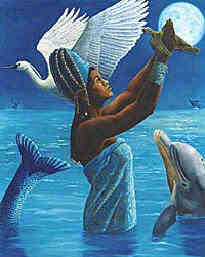
An African
Cosmogony:
1. The god in this
story behaved very sickly. He vomited
everything up that was created and after that didn’t do much.
2. Humans came from
the god that vomited them up, so the place of humans in this myth is to help
keep the earth clean.
3. He helps man to
learn how to create fire. He wants to
help them.
Sunday, March 11, 2012
Week 8 Reflection
Carson helped America realize the harmful effects their pesticides and other harmful chemicals were having on the environment. She is very matter of fact and really makes you think. She is very witty and funny. The fable shows how people can impact their environment without even knowing it.
The Easter Island society became a wasteland from a natural paradise because as society gained progression and moved forward, they were unaware of the impact they were having on their natural resources. The statues show how the Islanders didn't really care about their environment, only to show off to the other tribes. This story can be compared to our society in many ways because we are becoming more and more unaware of how much we are using our resources each year. If we don't be careful and start being more preservative with our resources, we are going to end up like the Easter Island society.
The Easter Island society became a wasteland from a natural paradise because as society gained progression and moved forward, they were unaware of the impact they were having on their natural resources. The statues show how the Islanders didn't really care about their environment, only to show off to the other tribes. This story can be compared to our society in many ways because we are becoming more and more unaware of how much we are using our resources each year. If we don't be careful and start being more preservative with our resources, we are going to end up like the Easter Island society.
Week 7 Reflection
The polar extremes Abbey discusses are either being such an environmentalist fanatic or not caring about the parks at all and wanting to purposefully ruin them. His writing style is very informal and makes the reader feel like they can relate well. He is very funny, so I do enjoy his writing style quite a lot. I feel like I can relate well to him and that we understand each other.
Week 6 Reflection
The argument in the text "Wildlife in American Culture" is that society is having a very negative impact on the environment. I think that Leopold is right because we really could be better about preserving our natural resources. We need to be doing all we can to help save our earth. I am not a hunter, but I think a hunter would still think that although we need to help preserve our natural resources, we should still be able to hunt and use the animals for food. I think that people from the East Coast wouldn't care about our natural resources as much because they don't have as many mountains or wide open spaces there. They wouldn't care as much because they haven't seen how beautiful the earth can be if we don't pollute it.
Tuesday, March 6, 2012
A Fable for Tomorrow
Page 370. The general argument made by Rachel Carson in
her work A Fable for Tomorrow is that
if humankind is not careful, we could lose all the beauty around us. More specifically, Carson suggests that no
one can take this beauty from us, but ourselves. She writes, “No witchcraft, no enemy action
had silenced the rebirth of new life in this stricken world. The people had done it themselves” (p.
371). In this passage, Carson I
suggesting that unless society starts to take better care of the earth, all of
the beautiful things we enjoy could simply disappear and we wouldn’t know what
to do to get them back. In conclusion,
it is Carson’s belief that we need to take care of the earth we live in to
enjoy it’s beauty.

In my view, Carson is right because
no one is going to take care of the earth or destroy the earth except for our
society because we are the ones that make decisions to either help or harm the
earth. For example, we can help the
earth by either carpooling or riding our bikes more often instead of buying and
driving inefficient fueled vehicles that cause carbon monoxide poisoning in the
air. Although Carson might object that
it’s not too late to turn back from this point, I maintain that if everyone
starts making healthier decisions for our earth, we can turn back and make the
earth a better place. Therefore, I
conclude that making the earth a better place for everyone, including the earth
itself, should be everyone’s number one priority because without the earth, we
couldn’t survive.
Easter's End
Page 425. The general point made by Jared Diamond in
his work Easter’s End is that if
societies use up their resources, they become extinct. More specifically, Diamond suggests that if
American society doesn’t learn from the Easter Islanders mistakes, we will end
up like them. He writes, “unlike the
Easter Islanders, we have histories of the past –information that can save us”
(p. 431). In this passage, Diamond is
suggesting that we can save ourselves and learn from past mistakes of
others. In conclusion, it is Diamond’s
belief that we can save ourselves from the fate of cultures like the Easter
Islanders if we use our resources wisely and start living differently.

In my view, Diamond is right because
society needs to realize how wasteful we are being of our resources and start
coming up with a plan to save our earth.
For example, if everyone were to start realizing that we don’t need buildings
everywhere and we don’t need our inefficiently fueled cars as much as everyone
thinks we do, our earth would start to somewhat recover slowly. Although Diamond might object that people won’t
resist this change, I maintain that although people will resist, the change
will be well worth it to continue our society.
Therefore, I conclude that we need to learn from past mistakes and society
needs to start making better decisions to help our earth recover before it is
too late.
Sunday, March 4, 2012
The Hudson River School
The
Hudson River School started in 1825 and ended in 1880. The purpose of the Hudson River School was to
help young artists view the landscape of America and romanticize it. Some of the unique characteristics in the paintings
created at the HRS were the many trees, open fields, waterfalls, mountains,
dramatic sunsets, and especially the spiritual light coming from above. There weren’t any animals in any of the
paintings because if the artists wanted to romanticize the landscape, they
needed to show how beautiful and safe it was, rather than how scary and dark it
can really be. Almost all of the
paintings were very bright and happy.
The paintings made you feel like you would feel much better if you were
to spend more time in nature rather than in the city. Europeans did not have any open wilderness at
this time such as America had, and Europeans envied that. They wanted to be able to live in the free,
open air as Americans did and still do today in some cases. After these paintings were viewed by
Europeans, they would want to move to America.
The settings of the paintings looked very realistic, but also looked
unrealistic because it was so bright and beautiful with all of the waterfalls,
open space, and vivid light. Some
Europeans didn’t believe these were realistic because of those things. They didn’t believe such beautiful places
could exist.


In conclusion, because of these
paintings, people from Europe wanted badly to come to America. If they wanted so badly to come to America
and see these beautiful landscapes, we should want to protect them as much as
we can. “Find…encouragement and
inspiration in precisely the present condition of things, and cherish it with
the fondness and enthusiasm of lovers” (Allen & Almonte, 2009, p. 354). This means that although we should be happy
with the current circumstances, meaning how our landscapes are now, we should want
to protect them and better them as much as possible. The painters from the HRS Romanticized the
American West because of our beautiful landscapes. We should want to continue that romanticism
and keep them looking as beautiful as we can.
References
Belson,
J., & Henderson, R. (2011). Retrieved March 1, 2012 from: http://whitemountainart.com/biographies/bio_jfc.htm
Belson,
J., & Henderson, R. (2011). Retrieved March 1, 2012 from: http://whitemountainart.com/biographies/bio_fec.htm
Wikipedia. (2012).
Retrieved March 1, 2012 from: https://en.wikipedia.org/wiki/Thomas_Moran
Allen,
P., & Almonte, P. (2009). That is
the question. United States of
America: Pearson.
Sunday, February 26, 2012
Week 5 Reflection
The significance of the Peach Blossom in the culture is that the Peach Blossom represents life and happiness. In the poem, I think it represents these things as well, but also represents the beauty of simplicity. I've realized in my own life that if I make more time for more important things, my life becomes much more simple rather than always worrying about big things in my life. Life is really about being happy with the little things.
 My footprint for the Ecological Quiz was 4.92 Earths. I could lighten my footprint by buying more organic foods and using compost piles rather than a garbage disposal. I could not travel so much by car or plane, I could ride my bike and walk more places, especially when it is nicer weather outside.
 In the selections from Walden reading, these were three quotes I found and related to.
1. "What people say you cannot do, you try and find that you can" (page 351). I really like this quote because when people tell you that you can't do something, it gives you even more motivation to prove them wrong and show them that you can do what they said you couldn't. I've realized this in my own life and it always turns out that I can do the things that people say I couldn't do. It makes me feel more accomplished too when I complete those tasks. I thank the people silently that said I couldn't something, because they were my motivation to complete that event.
2. "Some things are really necessaries of life in some circles, the most helpless and diseased, which in others are luxuries merely, and in others still are entirely unknown" (page. 352). This quote really got me thinking about how much we take for granted in the United States. We have so many freedoms and luxuries that so many other countries don't get to enjoy. Many cultures don't even know about the existence of such freedoms or technology that we have here today. It made me really grateful for everything I have and made me appreciate the simple things in life, as well as the bigger things I don't really even think about.
3. "A man is rich in proportion to the number of things which he can afford to let alone" (page. 360). The reason I liked this quote so much was because it made me realize how many things we really don't need. Society and the media makes everyone think that we need all of the newest and most hi-tech things there are out there, but in reality, they just make our lives more complicated and more problematic. For example, everyone wants and iPhone, but the second you buy it, they come out with a newer "cooler" version of it, making you need to save up all your money all over again. We don't always need the newest thing out there, because if we try to simplify our lives rather than focus on trying to just get more "stuff," our lives will be much better off.


1. "What people say you cannot do, you try and find that you can" (page 351). I really like this quote because when people tell you that you can't do something, it gives you even more motivation to prove them wrong and show them that you can do what they said you couldn't. I've realized this in my own life and it always turns out that I can do the things that people say I couldn't do. It makes me feel more accomplished too when I complete those tasks. I thank the people silently that said I couldn't something, because they were my motivation to complete that event.
2. "Some things are really necessaries of life in some circles, the most helpless and diseased, which in others are luxuries merely, and in others still are entirely unknown" (page. 352). This quote really got me thinking about how much we take for granted in the United States. We have so many freedoms and luxuries that so many other countries don't get to enjoy. Many cultures don't even know about the existence of such freedoms or technology that we have here today. It made me really grateful for everything I have and made me appreciate the simple things in life, as well as the bigger things I don't really even think about.
3. "A man is rich in proportion to the number of things which he can afford to let alone" (page. 360). The reason I liked this quote so much was because it made me realize how many things we really don't need. Society and the media makes everyone think that we need all of the newest and most hi-tech things there are out there, but in reality, they just make our lives more complicated and more problematic. For example, everyone wants and iPhone, but the second you buy it, they come out with a newer "cooler" version of it, making you need to save up all your money all over again. We don't always need the newest thing out there, because if we try to simplify our lives rather than focus on trying to just get more "stuff," our lives will be much better off.
Week 4 Reflection
 A reader can learn through reading Literature because it helps you to gain new experiences though otherwise you wouldn't get to experience. If no one ever read, no one would ever understand each other or what other people are going through in the world without them actually going through it themselves. It is the closest thing we can get to to understanding each other without fully experiencing it ourselves. People are reading less today because the media is making it seem like it is a total waste of time and there are much better things to spend your time doing, like watching pointless TV shows, or spending hours on end on the computer. There are much fewer critical readers and writers today because no one understands how or when they are actually using their critical reading or writing skills. People don't understand what they mean, so they don't know how to put them to good use. You cannot be a good critical reader or writer unless you are constantly thinking about how to better those skills as you are reading or as you are writing. Unless you are really reading or writing the majority of your time, you won't understand how to obtain those skills and put them to work. Poetry can be very helpful when developing these skills because it makes you think and interpret what the poem is trying to say. The poem usually doesn't just state what it was about, otherwise it wouldn't be poetry. Poetry makes you think about how YOU interpret it rather than how others see it. It gives you a chance to use your critical skills, as well as to be creative in the way that you think about different aspects of the world.
Polemic: Industrial Tourism and the National Parks
Page 385. The general point made by Edward Abbey in his
work Polemic: Industrial Tourism and the
National Parks is that we need to take better care of the national parks to
preserve their beauty. More
specifically, Abbey argues that the tourists that visit the parks need to be
more aware of how they are affecting the park depending on what they are doing
or how they are camping. He writes, “campgrounds
where I used to putter around reading three-day-old newspapers full of lies and
watermelon seeds have now been consolidated into one master campground that
looks, during the busy season, like a suburban village” (p. 387). In this passage, Abbey is suggesting that
most of the modern-day tourists are ruining the national parks with all their
motor vehicles and their way of camping when they come to visit the national
parks. In conclusions, it is Abbey’s
belief that if we don’t ban motor vehicles and paved roads from national parks,
they will be destroyed and future generations will not be able to enjoy them.

In my view, Abbey is right because
many of the modern-day tourists only do things in ways in which they are
comfortable. For example, I have been
camping many times in my life, but only once have I ever camped in a tent,
without flushable toilets and no electricity whatsoever. People only do what they feel comfortable
with. Although Abbey might object that his
idea might drive some people away from camping, I maintain that it would, but
only the people that were really against going without all of their high-tech
gadgets. Therefore, I conclude that we
do need to take better care of our national parks in whatever way possible so
that our posterity will be able to enjoy them.
Sunday, February 19, 2012
Wildlife in American Culture
Page 372. The general point made by Aldo Leopold in his
work Wildlife in American Culture is
that modern society with all its new technology and inventions, is having a
very negative impact on the environment.
More specifically, Leopold suggests that society is continually
destroying parts of the environment when we really don’t need to. He writes, “the conquest of nature by machine
has led to much unnecessary destruction of resources” (p. 372). In this passage, Leopold is suggesting that
society as a whole can do a much better job with being aware of what we truly
need to take from the environment and what we need to preserve. In conclusion, it is Leopold’s belief that “we
shall achieve conservation when…the destructive use of land becomes unethical”
(p. 372).

In my view, Leopold is right because
we really could be better about preserving our natural resources to help save
the environment a little bit more. For
example, we use a lot of paper and water as a society. If everyone were to recycle every possible
thing they could and to try to take shorter showers, turn off the water while
brushing their teeth, and other things like that, it would help the environment
so much. Riding your bike would also
help a lot to reduce pollution of the air we breathe every day. Although Leopold might object that people don’t
care about the environment because of the current world we live in, I maintain
that everyone wants to help protect the earth we live on but they just aren’t sure how to
do that. Therefore, I conclude that if
there was more awareness put out there about the environment and how our
actions effect it, people would be better about doing things to help the
environment rather than cause more damage that what has already been done.
Introduction & Peach Blossom
Introduction
(Page 341). This passage was about how influential man
and civilization in general can be on nature.
This really made me start thinking about how although people are
separate from nature, we are a part of it just as much. We influence nature so much, and we need to
start taking better care of it. This
made me think of one of my favorite quotes, “We did not inherit the earth from
our parents, but we are borrowing it from our children.” I really like this quote because it makes me
want to take better care of the earth for my children. In this passage, the quote “their cultures
maintained a sense of nature as intimately connected with who we are” (p 342)
really made me think of how if our society was more connected to nature and had
it as a sense of how we became who we are today, we would want to take better
care of our earth.
Peach Blossom

(Page 344). This poem depicts a fisherman travelling down
a stream where he finds a cave. He goes into
the cave and discovers a small village of people who live simple and ordinary
lives, but are very happy. They had
“lost all connection with the outside world” (p. 344). I think that the moral of the story here, is
that everyone can be happy if they go looking for it. Being happy is achieved by simplifying your
life, in whatever way you see possible.
People in today’s society need to recognize this and not stress over the
little things in life. American culture
is probably one of the biggest cultures that need to simplify. A lot of other cultures in the East, like
places of Africa and India, lead very simple lives. They are much happier there because they are
more aware of themselves and the world around them. They feel connected to everything and are
happier because of it.
Friday, February 10, 2012
Reading Quiz #2
Reading
literature can help society better understand and connect to other
cultures. Mario Vargas Llosa writes, “we
share as human beings, what remains common in all of us under the broad range
of differences that separate us. Nothing
better protects human being against the stupidity of prejudice, racism,
religious or political sectarianism…that men and women of all nations and
places are essentially equal, and that only injustice sows among them
discrimination, fear, and exploitation” (p. 40). What he means by this is that every human
being, no matter what race, religion, gender, or culture, is all equal and that
one can only become connected to others of a different race, religion, etc. is
by reading literature. That is the only
possibly way one can become aware of the world around him.
 An example that comes to mind is the
novel Uncle Tom’s Cabin by Harriet
Beecher Stowe. Through this piece of
literature, people come to understand the importance of life, liberty, and
equality among all people. Uncle Tom’s
Cabin truly showed what it was like to be a slave in the South in the 1850’s. This novel played a huge part in the Civil
War because it showed how awful it was for the slaves. People realized that slavery was wrong and
immoral and started fighting for what they believed in after they read this. Literature can have such a strong influence
on people to do incredible acts of valor that they never thought they had the
strength to do. This shows that through
literature, people can become connected and aware of what is going on in the
world around them, and standing up for what they believe in.
An example that comes to mind is the
novel Uncle Tom’s Cabin by Harriet
Beecher Stowe. Through this piece of
literature, people come to understand the importance of life, liberty, and
equality among all people. Uncle Tom’s
Cabin truly showed what it was like to be a slave in the South in the 1850’s. This novel played a huge part in the Civil
War because it showed how awful it was for the slaves. People realized that slavery was wrong and
immoral and started fighting for what they believed in after they read this. Literature can have such a strong influence
on people to do incredible acts of valor that they never thought they had the
strength to do. This shows that through
literature, people can become connected and aware of what is going on in the
world around them, and standing up for what they believe in.
On the other hand, Laura Bohannan thought
that everyone viewed the world as well as stories the same way no matter what
culture or religion. However, she also
proves the point that only through literature can society understand one
another by finding out that she is wrong about how she thinks of other cultures
once she tells a tribe in Africa the story of Hamlet by Shakespeare. At
the beginning of her story, she thinks “human nature is pretty much the same
the whole world over” (p. 29). She
realizes she is wrong by the end of telling her story because the African tribe
was so confused on so many different parts of the story. They didn’t view the story the same way she
did, like thinking that two years was much too long for a widow to mourn, or
that it is very acceptable for the brother to marry the deceased brother’s
wife. She realizes at the end that only
through reading literature and thinking about how other cultures might view the
world, stories, or poetry differently, that that is the only way the whole
world can be connected. Through
education of other cultures, religions, etc. and by reading can society
understand one another even through their differences.
An example that proves the point
that only through reading can people become connected is the example of how
differently the story of Cinderella
is viewed differently in the United States rather than in China. In Cinderella
in the United States, the Fairy Godmother is an actual person who grants wishes
to Cinderella. However, in China, the
Fairy Godmother is a coy fish who grants wishes to Cinderella. In China, the coy fish is a symbol of good
luck. If society didn’t have literature,
no one would be able to understand how cultures would view the exact same story
so differently. Because society has
literature though, everyone feels connected because each culture is trying to
understand the beliefs, ideas, and opinions of another culture in which they
are reading about.
These two articles, Shakespeare in the Bush by Laura
Bohannan and Why Literature? by Mario
Vargas Llosa, are connected because only through reading literature can the
whole world understand each other.
Without literature, nothing connects us to one another because everyone
is so different and unique. Each
culture, religion, political group, etc. will always have different opinions
and views on everything under the sun.
However, if everyone makes an effort to learn from literature and
understand the other person’s point of view, society will feel more connected
as a whole.
Through literature, people won’t feel as
alone as they did before reading. They
will feel they have a better understanding of another person’s culture because
of the literature they have read on that specific subject of that culture’s
beliefs. Through understanding other’s
culture, people become more aware of themselves and better understand
themselves because they have learned something new about someone else. Therefore, reading literature can help
society better understand and connect to cultures around the world, including
their own.
Subscribe to:
Posts (Atom)